Compliance officers have become harder to do without. As legal frameworks get more complex and enforcement becomes more active, demand for people who can navigate that environment has grown steadily across almost every industry.
The Role of a Compliance Officer
Before getting into the interview questions, it’s worth being clear on what the role actually involves. A compliance officer ensures the organization stays on the right side of external laws, regulations, and internal policies – conducting risk assessments, monitoring for violations, and ensuring ethical standards are upheld in practice, not just on paper.
It’s not a straightforward job. Regulations change frequently, and the people in this role need to keep up, communicate clearly with stakeholders, and ensure employees across the business understand what’s expected of them. Attention to detail and strong analytical thinking aren’t optional – they’re what the job runs on.
Top Interview Questions for Compliance Officers in 2026
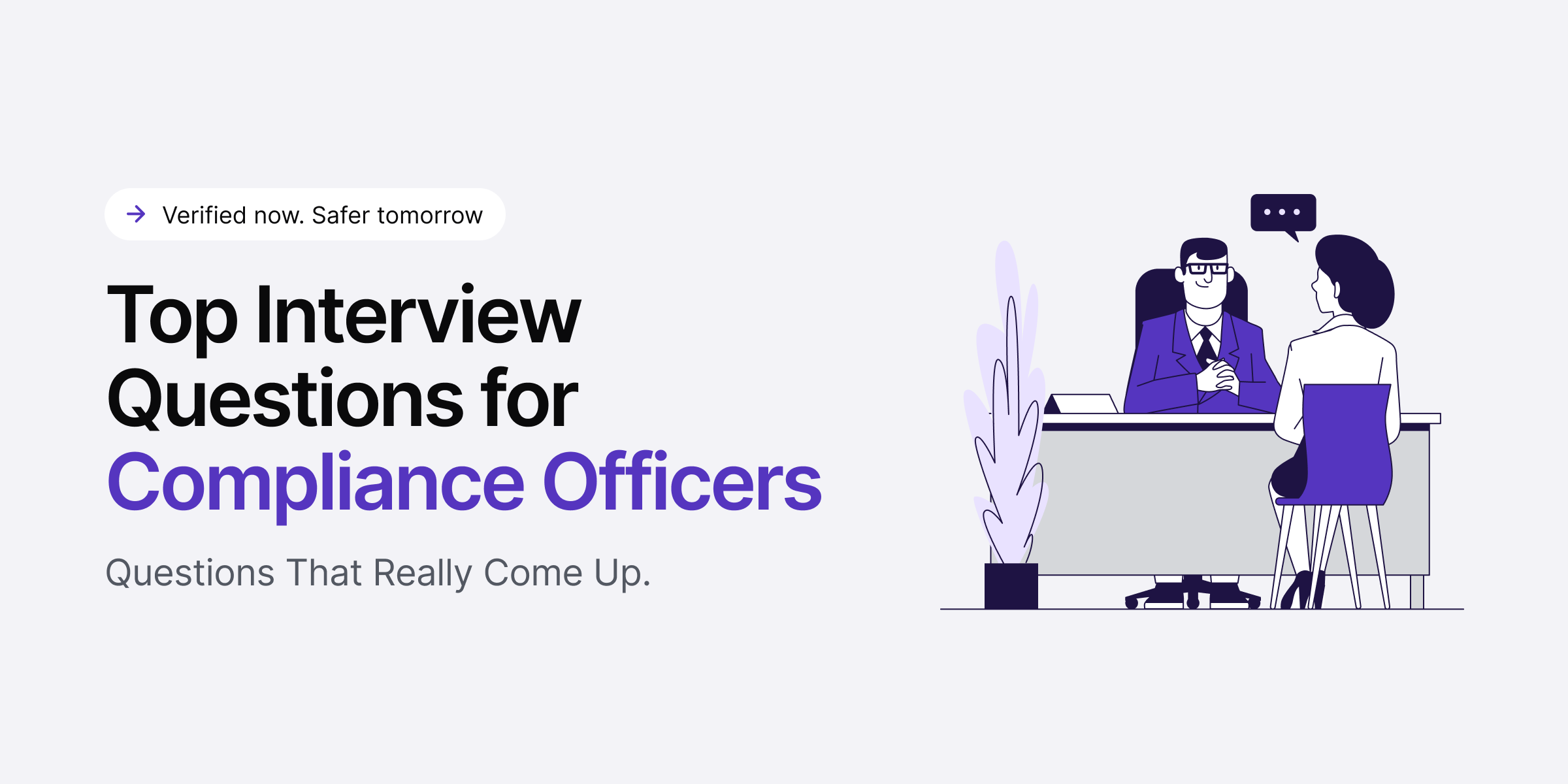
Interviewers want to know technical knowledge and behavioral competencies. Below are the most common questions that candidates might encounter during the interview.
- How do you stay updated with changing compliance regulations?
Why was this question asked?
With this question, employees seek candidates who monitor and adapt to the changing regulations.
How to Prepare for the Question:
Discuss the strategies about how you are staying informed; maybe you are subscribed to various industry publications, maybe you attend seminars or participate in professional networks, and utilize compliance management platforms that offer real-time updates – just tell them how you are staying updated with the trends. Organizations value professionals who are active about regulatory changes.
- Can you provide an example of a compliance challenge you faced and how you addressed it?
Why was this question asked?
This question helps employers to get to know your abilities when it comes to solving problems and practical experiences.
One of the most common challenges in compliance is ensuring that client onboarding processes meet regulatory expectations. Due diligence measures help compliance officers reduce risks and maintain efficiency.
How to Prepare for the Question:
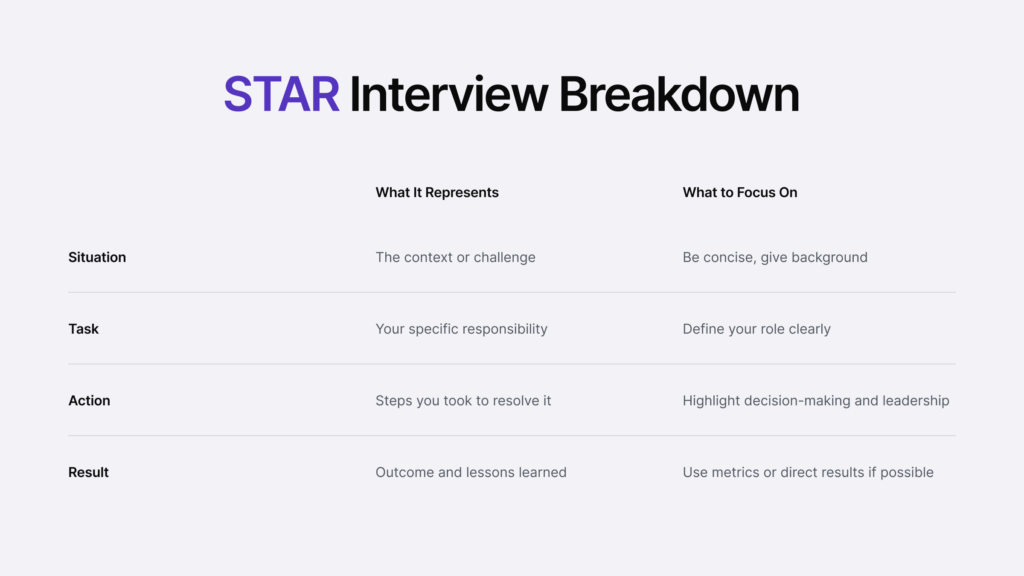
There is one method that you could use, and it is working pretty well, actually – the STAR method – Situation, Task, Action, Result to structure your response. You could provide a specific scenario that happened, what you did then, and what the outcome was. Also, communicate effectively and add an example that demonstrates your ability to think critically.
- How do you handle conflicts between compliance requirements and business objectives?
Why was this question asked?
Balancing regulatory compliance with business goals is a very common challenge that must be addressed.
How to Prepare for the Question:
Highlight your ability to work across departments to find solutions that meet compliance requirements without disrupting how the business actually runs. A lot of candidates can talk about compliance in isolation – fewer can show they understand how it sits alongside operational efficiency and commercial priorities. That balance is what hiring managers in this space are really looking for.
- What strategies do you take with you for effective compliance training programs?
Why was this question asked?
Training is essential to make sure that the employees understand compliance protocols.
How to Prepare for the Question:
Cover how you build and deliver training, not just what goes into it. Effective compliance training mixes formats – slides, interactive elements, and real-world scenarios that employees can actually relate to. Mention any e-learning platforms you’ve used, and explain how you measure whether they’ve worked. Assessments, feedback, follow-up checks – showing you think beyond the session itself is what stands out.
- How do you conduct a compliance risk assessment?
Why was this question asked?
It is a foundational compliance management.
How to Prepare for the Question:
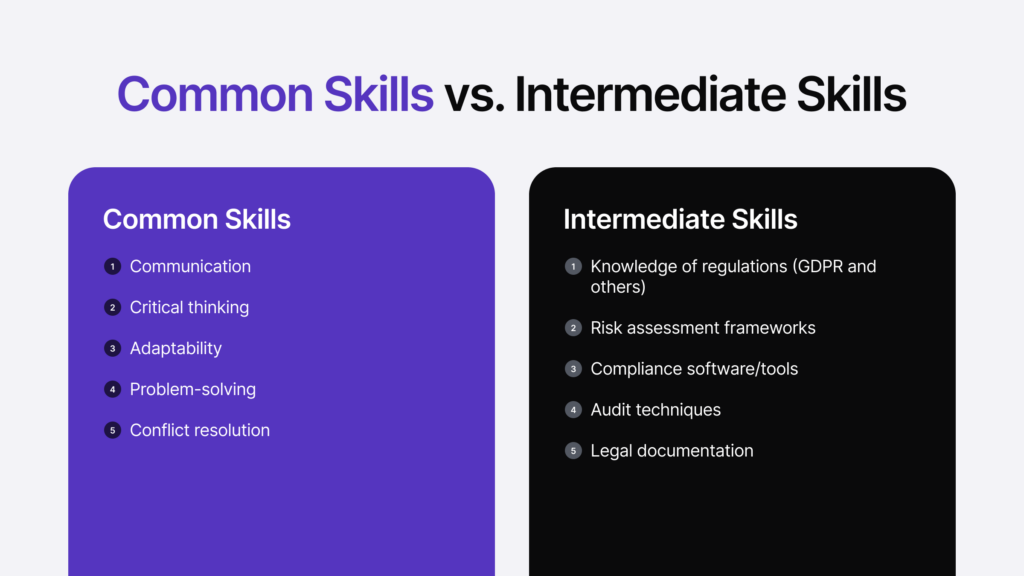
Try to detail your methodology for identifying and prioritizing risks, with the implementation of mitigation strategies that are helping the company to lower various risks. Explain how you categorize risks based on their potential likelihood and how you create action plans to address high-risk areas effectively. The use of compliance software has to be discussed as well to automate some aspects of risk assessment and increase accuracy.
- Describe your experience with compliance monitoring and auditing.
Why was this question asked?
Ongoing monitoring ensures safety for policies.
How to Prepare for the Question:
Share examples of audit processes you’ve had before and tools that you’ve used to explain your approach to the audits, including external and internal ones. Emphasize your ability to analyze data trends to avoid compliance issues.
- Did you approach the hybrid work model?
Why was this question asked?
The workplace could be using a hybrid work model, and flexibility is becoming more popular, so employers want to know how you adapted.
How to Prepare for the Question:
Touch on how you adapted when the working environment changed – not just that you made it work, but how. Talk about the tools you used to keep communication and collaboration going across a distributed team, and how you maintained accountability without the structure of an office. If you put new routines or processes in place to stay focused and on top of deliverables, mention those too. The point isn’t just that you survived the transition – it’s that you managed it deliberately and kept the quality of your work consistent throughout.
- How do you manage SaaS access for employees in a hybrid work model?
Why was this question asked?
SaaS tools are important, and securely managing their access is key.
How to Prepare for the Question:
Cover how you handle user access from day one to departure – setting it up, keeping it current as roles shift, and cutting it off when someone leaves. Bring in any tools or policies you’ve used to monitor SaaS usage and catch anything that shouldn’t be there, and mention how you work with IT and security to keep things joined up rather than siloed.
Related: Top 5 Compliance Automation Tools in 2025
Preparing for Your Compliance Officer Interview
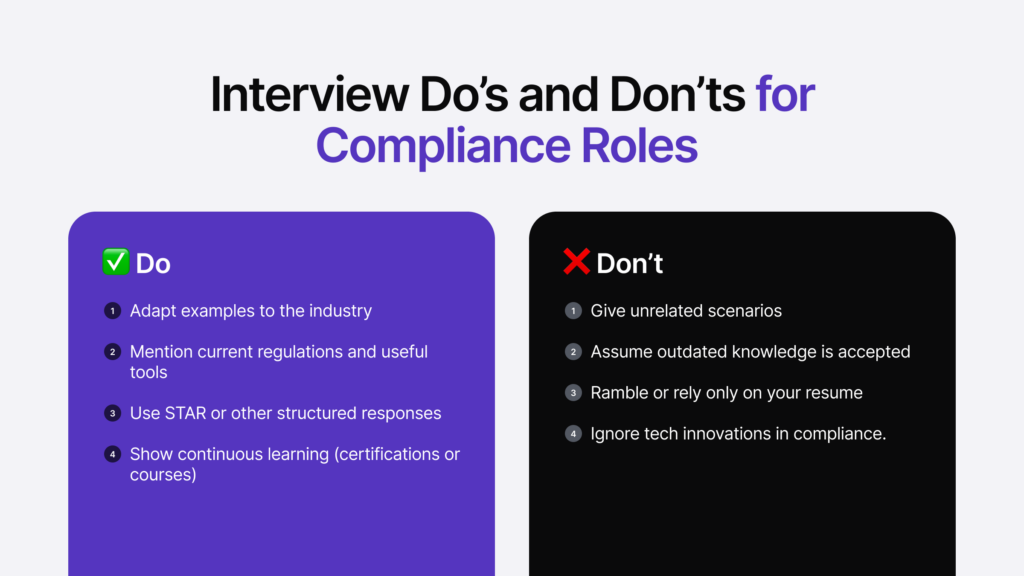
To stand out in your interview from others, read through these bullet points:
- Be Sure to Know the Company: Blindly going into the organization’s open job position would not be the best idea – make sure you understand its industry and regulatory environment.
- Practice Behavioral Challenges: Remember to rely on your past experiences and be prepared to discuss them in detail.
- Stay Informed: Keep ahead of your competitors and be informed about new trends and technologies that are being implemented.
- Demonstrate Communication Skills: Talk about how you led training sessions or how you explained policies.
Conclusion
Compliance officers are strategic partners who minimize risk and ensure organizational safety. If you would take your time, relax, and try to understand the top interview questions of 2026 for compliance officers, you could be one of them, as you would set yourself up as a good candidate ready to make an immediate impact on the organization to make it better.