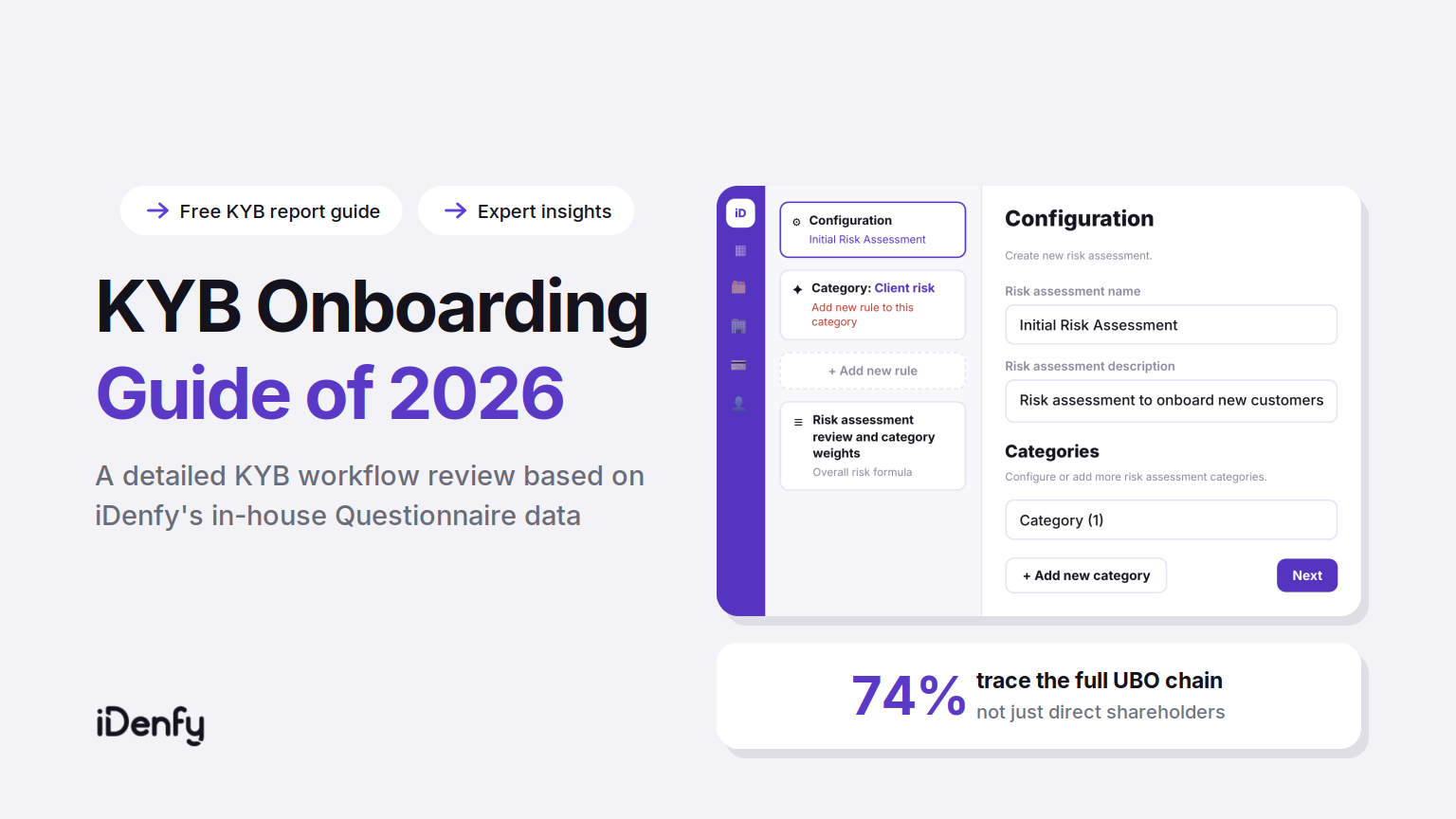
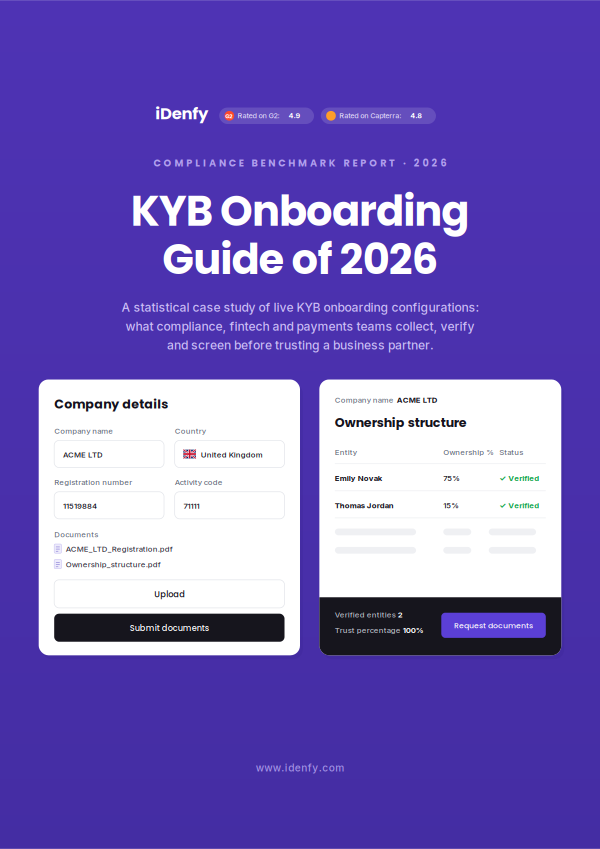
Our team reviewed onboarding configurations or automated workflows that iDenfy’s partners use for their own KYB verification. Read this guide to understand how regulations are applied based on different industry examples, including iGaming, fintech, crypto/VASPs, marketplaces, among others.
iDenfy’s report’s write-in KYB questionnaire answers show teams tiering their requirements by risk. Baptiste Forestier sees the same shift in practice.
iDenfy’s guide also explains how new approaches, such as dynamic workflow settings, can optimize KYB compliance. Forestier describes the pressure that made this change an industry standard:
“With KYB onboarding flows becoming more modular, regulators expect dynamic data collection. A one-size-fits-all model is no longer acceptable and documentation must be tailored to individual client profiles.”
— Baptiste Forestier, compliance professional with 10+ years of experience
A quick sneak peek into what’s inside:
- 73 KYB form configurations from fintech, crypto, iGaming, payments and marketplace teams using iDenfy
- Examples of what these teams collect and verify, including the basics like standard company data and five entity layers or linked shareholders
- Concrete KYB-related details you should pay attention to, such as document depth and sanctions screening coverage, or UBO thresholds
- Popular KYB onboarding mistakes and key improvement methods to better automate your corporate entity verification workflow, backed by data
iDenfy’s 12-page report provides an example-based explanation of what the “workflow” term means in practice and how you can set up a KYB automation that helps save time and eases the daily job that your compliance specialists are required to do when onboarding other entities. The report covers the key differences between industries and what each one collects, explaining why one workflow might not be a good fit for a different use case, and vice versa.
Verify businesses, not just people
Automate company verification, UBO checks, and business due diligence with iDenfy KYB.
Explore KYB Solution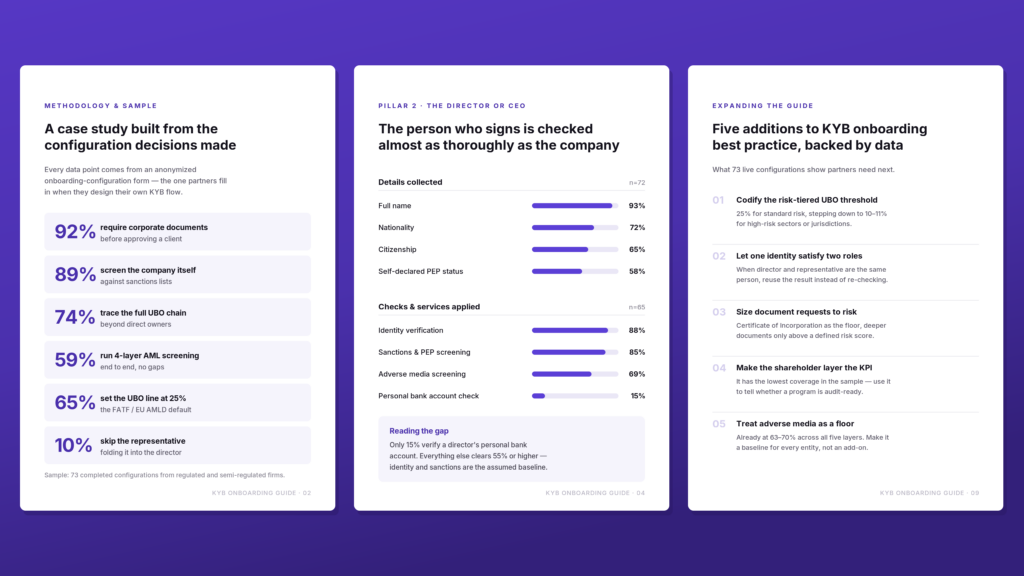
This report is useful because it’s based on real-life examples and anonymized KYB configuration forms. In general, iDenfy’s users can customize this step on the Business Verification dashboard. Once the steps are complete and set up, they are turned into a ready-made form that the applicant, such as the entity’s representative, needs to submit and complete as part of the company’s KYB verification process.
For example, iDenfy’s results show that ten teams did not use the standard UBO threshold template in the KYB questionnaire and customized this particular field, most of them setting 25% for medium-risk clients and 10-11% for high-risk ones.
Other findings from iDenfy’s report:
-> 92% require corporate documents before approving a business client
-> 89% screen the company itself against sanctions, not just its people
-> and much more
In contrast, traditional KYB onboarding previously often involved reviewing numerous documents and databases, making the whole process complex and time-consuming. Instead of auto questionnaires or custom forms, analysts manually went back and forth when asking for follow-ups and missing documentation.
No email or special registration is required. Click here to download the full version of iDenfy’s KYB Onboarding report.

 Download PDF